Greek Easter Traditions: A Resident's Guide + 20 Words You'll Hear This Week
Apr 04, 2026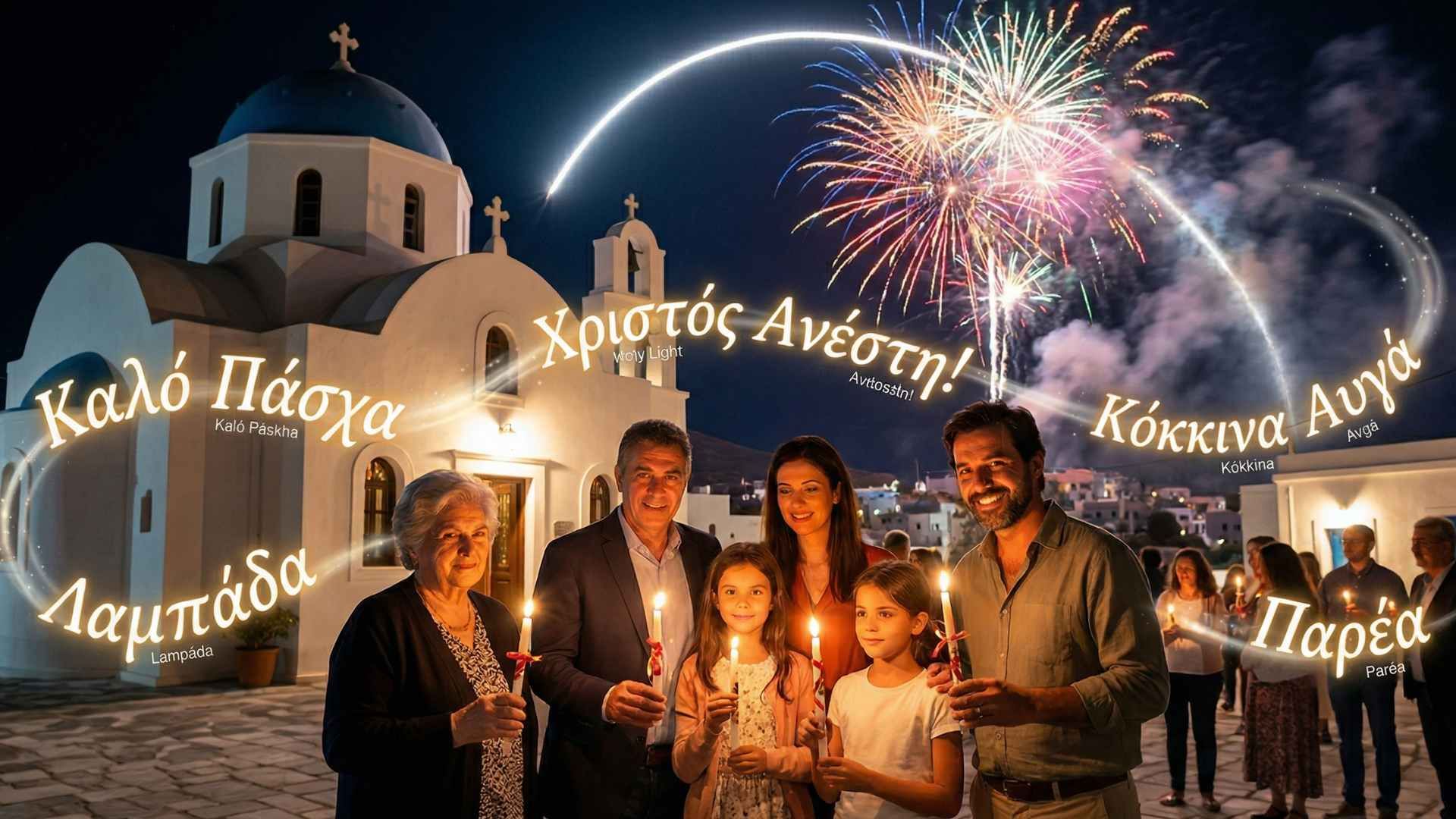
Greek Easter Traditions: A Resident's Guide + 20 Words You'll Hear This Week
By Joaquim Queiroz
Introduction: From Brazil to the Heart of Orthodoxy
On April 12th, Greece will come to a standstill. But it’s not the kind of standstill you see during a strike; it’s a spiritual, culinary, and deeply cultural pause. We are approaching Orthodox Easter (Pascha), without a doubt the most significant event on the Greek calendar.
I was born in Brazil, where most of us are raised Catholic. I grew up with the typical Western Easter traditions—lots of chocolate eggs and a nice Sunday lunch. However, my life took a "My Big Fat Greek Wedding" turn when I moved to Greece and decided to convert to Orthodoxy.
One of the first things I learned is that the dates rarely align. Because the Orthodox Church follows the Julian calendar for Easter, we often celebrate on different Sundays than the Catholic world (though every few years, the stars align and we celebrate together). But beyond the dates, the vibe is entirely different.
Bigger than Christmas: A Cultural Shift
In Brazil, Christmas is the "Main Event." Here in Greece? Easter is the undisputed king. Greeks are deeply connected to their traditions, and the lead-up to Easter Sunday is a 40-day marathon known as the Sarakosti (Lent).
My mother-in-law, who is very religious, follows the fast perfectly—no meat, no dairy, no fish with blood. Even my younger sister-in-law, Elli, completed the full 40-day fast this year! As for me? Well, I manage to survive one week of strict fasting before my Brazilian soul starts dreaming of a steak. However, I try my best to be present and grateful. There is a palpable energy in the air during this period that you just don't feel any other time of year.
The "Megali Evdomada" (Holy Week) Timeline
The "Great Week" is a crescendo of emotion, moving from the sorrow of the crucifixion to the explosive joy of the resurrection. Living here in Northern Greece, I’ve seen how these traditions vary, but the core remains the same.
Holy Thursday (Megali Pempti): The Day of Red
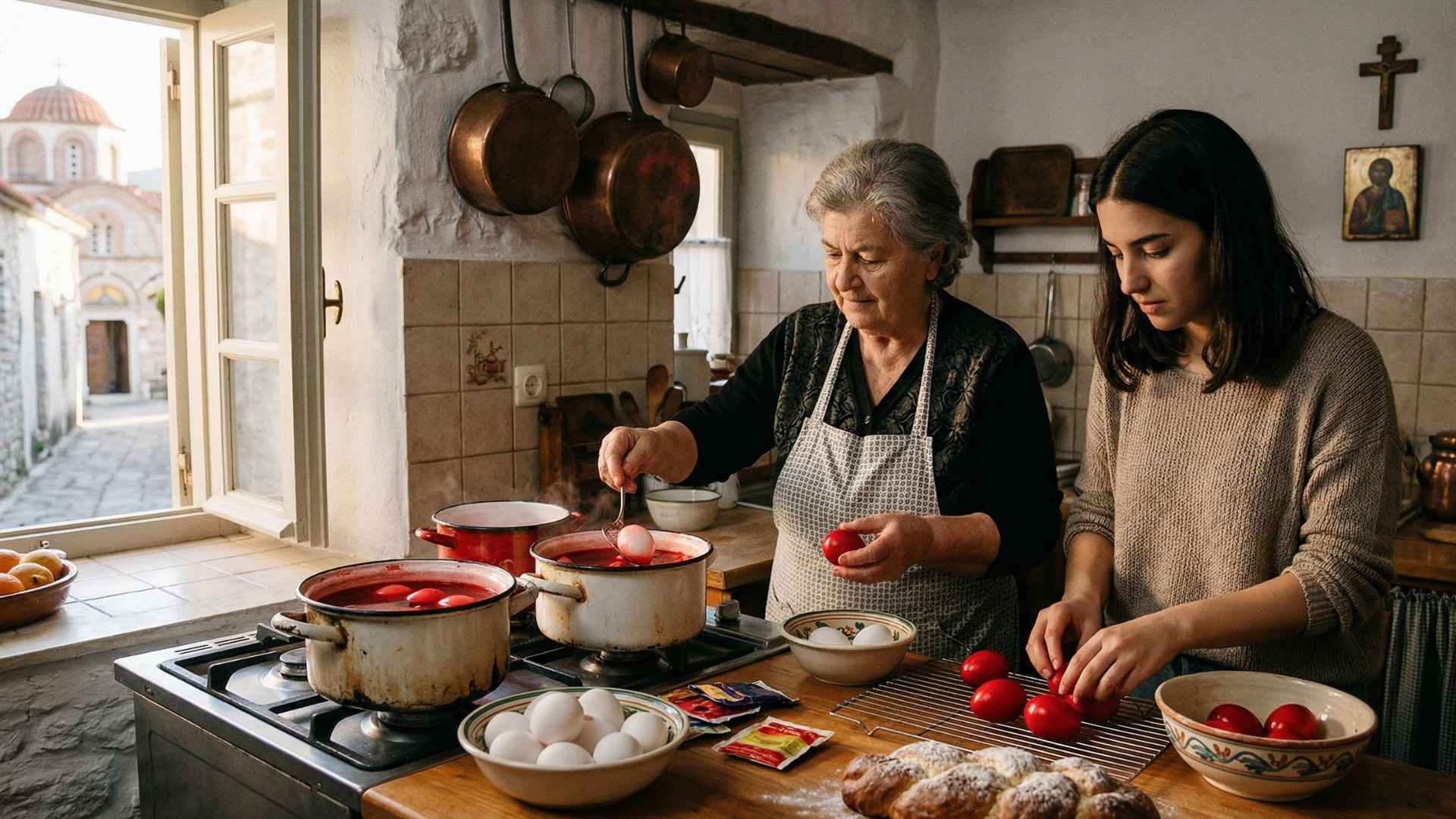
This is the day the house starts smelling like a bakery. We bake Tsoureki, a delicious, brioche-like sweet bread. But the main task is dyeing eggs. In Greece, we don't do pastel colors or stickers; we dye them blood red. This symbolizes the blood of Christ and the promise of new life.
Joaquim’s Resident Tip: In Northern Greece, where I live, there’s a lovely tradition where children go door-to-door to sing or announce the coming festivities, often receiving sweets or a few coins. It’s a beautiful community moment that reminds me of the caroling we see at Christmas.
Holy Friday (Megali Paraskevi): The Day of Silence
This is the most solemn day of the year. The church bells toll a slow, funeral mourn all day long. Traditionally, you don't work, and you certainly don't celebrate.
I remember one year my birthday fell on Holy Friday. In Brazil, that would mean a party. In Greece? No party, no music, not even a birthday cake! It was a day for reflection. This year, thankfully, the dates worked out better for me! At night, the entire neighborhood joins the Epitaphios—a flower-decorated bier representing the tomb of Christ—which is carried through the streets in a candlelit procession. It is hauntingly beautiful.
Holy Saturday (Megali Savvato): From Darkness to Light
Saturday is all about anticipation. People spend the day preparing for the midnight feast. Many go to church early to take communion. In the evening, everyone gets dressed up in their finest clothes—it feels like a grand gala.
At midnight, every light in the church is extinguished. The priest emerges with a single flame—the Holy Light—and shares it with the congregation. We all hold our Lambades (decorated candles) and pass the light to one another. Then comes the "war zone." As soon as the priest declares "Christos Anesti," fireworks explode, bells ring, and the fast is officially broken.
Easter Sunday (Kyriaki tou Pascha): The Great Celebration
Sunday is the day of the feast. If you walk through any Greek village or neighborhood, the air is thick with the scent of roasting meat. The most traditional sight is the Arni sti Souvla—a whole lamb roasting on a spit.
Coming from Brazil, I love a good BBQ, but seeing the whole animal roasting was a bit of a shock during my first year! It’s important to understand that for Greeks, this isn't just about the food; it’s a symbol of communal joy and sacrifice. It’s a day of dancing, music, and "Parea" (gathering with friends). Even if you aren't a big meat eater, the atmosphere of hospitality is infectious.
20 Words You’ll Hear This Week
To truly experience a Greek Easter, you need the language. Here are 20 essential words and phrases formatted for your vocabulary list:
-
Καλό Πάσχα (Ka-ló Pás-kha) – Happy Easter (Used in the days leading up to Sunday).
-
Νηστεία (Nis-tí-a) – Fasting/Lent.
-
Τσουρέκι (Tsou-ré-ki) – Traditional sweet Easter bread.
-
Λαμπάδα (Lam-pá-da) – The decorated candle used on Saturday night.
-
Επιτάφιος (E-pi-tá-phi-os) – The symbolic tomb of Christ/The Friday procession.
-
Ανάσταση (A-ná-sta-si) – Resurrection (The Saturday midnight service).
-
Χριστός Ανέστη! (Chris-tós A-nés-ti) – Christ is Risen! (The standard greeting after midnight).
-
Αληθώς Ανέστη! (A-li-thós A-nés-ti) – Truly He is Risen! (The mandatory response to the greeting above).
-
Άγιο Φως (Á-gi-o Phos) – Holy Light/Holy Fire.
-
Μαγειρίτσα (Ma-ye-rí-tsa) – The traditional offal soup eaten after the midnight service.
-
Κόκκινα Αυγά (Kók-ki-na Av-ghá) – Red Eggs.
-
Τσούγκρισμα (Tsú-ghris-ma) – The "egg cracking" game played at the table.
-
Αρνί (Ar-ní) – Lamb.
-
Σούβλα (Sú-vla) – The spit used for roasting meat.
-
Κύριε Ελέησον (Ký-ri-e E-lé-i-son) – Lord have mercy (A common chant in church).
-
Σαρακοστή (Sa-ra-kos-tí) – The 40 days of Lent.
-
Κουλουράκια (Kou-lou-rá-kia) – Traditional Easter butter cookies.
-
Παρέα (Pa-ré-a) – A group of friends/The feeling of togetherness.
-
Γλέντι (Glén-ti) – A big celebration with music and dancing.
-
Χρόνια Πολλά (Khró-nia Pol-lá) – "Many Years" (A general greeting for any holiday).
The Deeper Connection: Why Language Matters
You can visit Greece as a tourist during Easter and see the fireworks and smell the lamb. It’s a great experience. But to feel it? To understand why my mother-in-law cries during the Epitaphios or why my neighbors hug me and shout "Christos Anesti" with such fervor? For that, you need the language.
When you speak Greek, you aren't just translating words; you are unlocking a culture that is thousands of years old. You move from being an observer to being part of the Parea.
At Speak Greekly, we don't just teach you grammar; we teach you how to live the Greek life. Whether you want to understand the hymns of the Great Week or simply know how to ask for the best cut of lamb at the Sunday feast, we are here to bridge that gap.
Ready to start your journey? Join us at Speak Greekly and make next Easter your most authentic one yet!
Kalo Pascha to everyone!
Join Our Free Trial
Begin your Greek journey today and see how simple and motivating learning can be.
Bring a Bit of Greece to Your Inbox!
Join our mailing list to get weekly language hacks, vocabulary tips, and cultural insights delivered straight to your inbox.
We hate SPAM. We will never sell your information, for any reason.